



TLR1
TLR1 (Toll-like receptor 1) is a cell-surface pattern-recognition receptor that functions as a key component of innate immunity through the detection of microbial lipoproteins and lipopeptides[1][2]. TLR1 exerts its biological activity primarily by forming a heterodimer with TLR2, enabling selective recognition of triacylated lipopeptides and subsequent activation of inflammatory signaling pathways, including NF-κB-dependent responses[1][2]. Mechanistically, structural studies demonstrated that triacylated ligands such as Pam3CSK4 promote formation of an active TLR1-TLR2 signaling complex, in which the lipid moieties occupy distinct hydrophobic binding pockets within TLR1 and TLR2, thereby facilitating receptor dimerization and downstream signal transduction[2]. This ligand discrimination property distinguishes TLR1 from the closely related isoform TLR6, which also heterodimerizes with TLR2 but preferentially recognizes diacylated lipopeptides because of structural differences in its ligand-binding region[1][2]. In disease-relevant and experimental settings, TLR1 contributes to host responses against bacterial and mycobacterial components, and TLR1-deficient macrophages display impaired pro-inflammatory cytokine production following stimulation with mycobacterial lipoproteins or synthetic triacylated lipopeptides[1]. For experimental applications, the synthetic triacylated lipopeptide Pam3CSK4 is widely used as a selective TLR1-TLR2 agonist to investigate innate immune signaling, receptor activation mechanisms, and inflammatory responses in cellular and animal models[1][2].
References:
- [1]. Takeuchi O, et al. Cutting edge: role of Toll-like receptor 1 in mediating immune response to microbial lipoproteins. J Immunol. 2002 Jul 1;169(1):10-4. [Content Brief]
- [2]. Jin MS, et al. Crystal structure of the TLR1-TLR2 heterodimer induced by binding of a tri-acylated lipopeptide. Cell. 2007 Sep 21;130(6):1071-82. [Content Brief]
All Product Categories
-
TLR1 관련 제품 (9)
관련 제품 (9)

-
Pam3CSK4 TFA
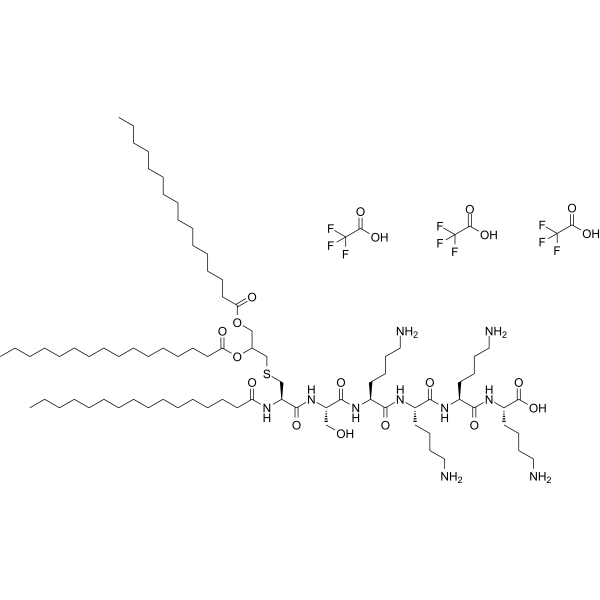 0 ImagesSynonyms: Pam3Cys-Ser-(Lys)4 TFAPam3CSK4 TFA is a toll-like receptor 1/2 (TLR1/2) agonist with an EC50 of 0.47 ng/mL for human TLR1/2.
-
CU-CPT22
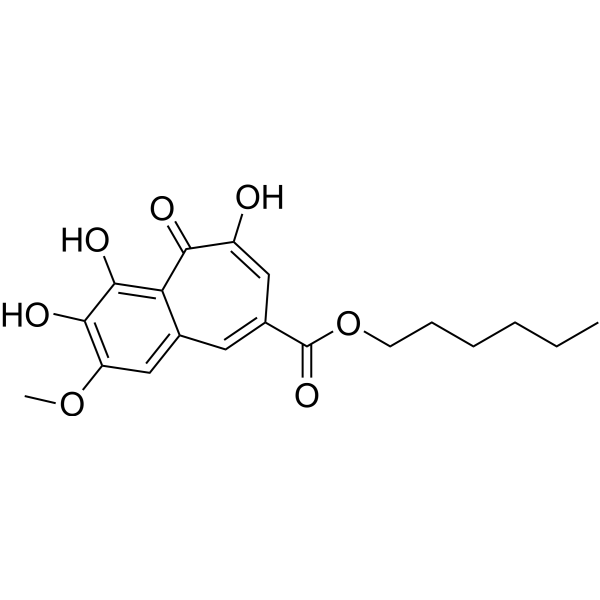 0 ImagesCU-CPT22 is a potent protein complex of toll-like receptor 1 and 2 (TLR1/2) inhibitor, and competes with the synthetic triacylated lipoprotein (Pam3CSK4) binding to TLR1/2 with a Ki of 0.41 µM. CU-CPT22 blocks Pam3CSK4-induced TLR1/2 activation with an IC50 of 0.58 µM.
-
Diprovocim
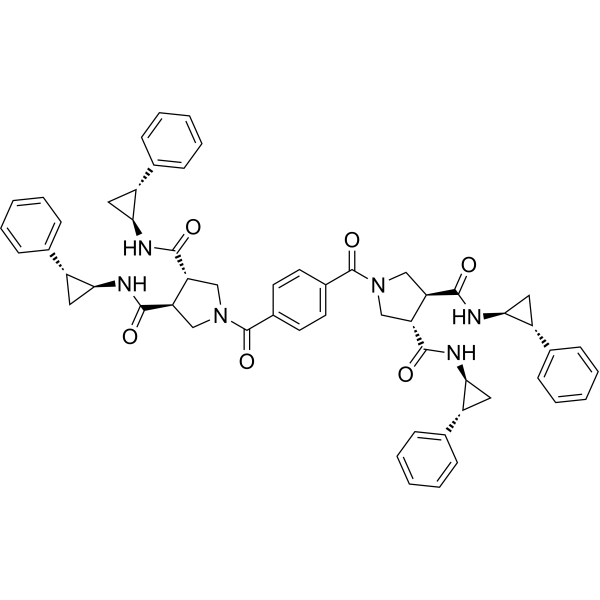 0 ImagesDiprovocim is a potent TLR1/TLR2 agonist. Diprovocim elicits full agonist activity in human THP-1 cells (EC50=110 pM). Diprovocim stimulates the release of TNF-α from mouse macrophages (EC50=1.3 nM). Diprovocim activates downstream MAPK and NF-κB signaling pathway. Diprovocim displays strong adjuvant activity in mice, particularly abetting cellular immune responses.
-
CU-T12-9
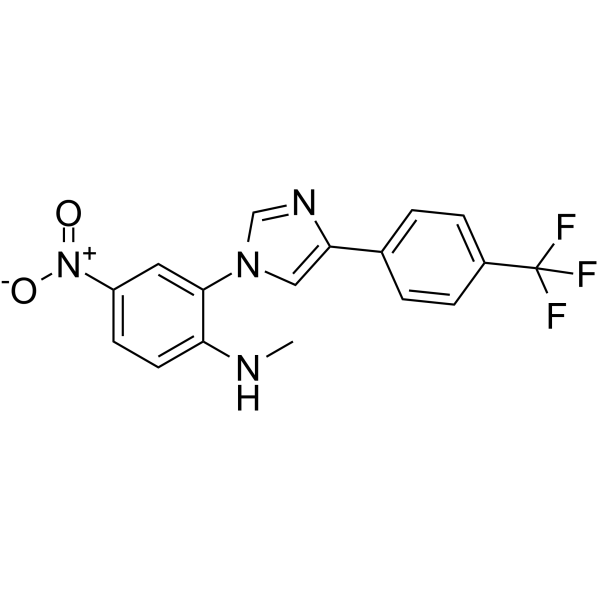 0 ImagesCU-T12-9 is a specific TLR1/2 agonist with EC50 of 52.9 nM in HEK-Blue hTLR2 SEAP assay. CU-T12-9 activates both the innate and the adaptive immune systems. CU-T12-9 selectively activates the TLR1/2 heterodimer, not TLR2/6. CU-T12-9 signals through NF-κB and invokes an elevation of the downstream effectors TNF-α, IL-10, and iNOS.
-
Pam3CSK4
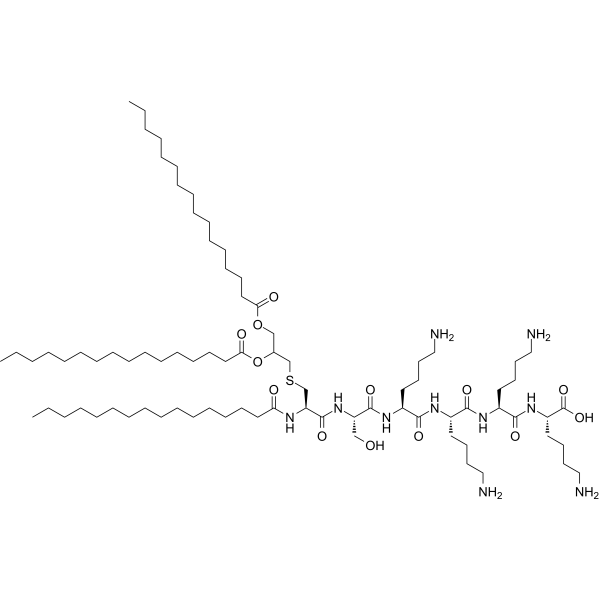 0 ImagesCat. No.: HY-P1180CAS No.: 112208-00-1Synonyms: Pam3Cys-Ser-(Lys)4Pam3CSK4 is a toll-like receptor 1/2 (TLR1/2) agonist with an EC50 of 0.47 ng/mL for human TLR1/2.
-
TLR2/1 agonist-1
 0 ImagesCat. No.: HY-183301TLR2/1 agonist-1 is a selective agonist of the TLR2/1 heterodimer. TLR2/1 agonist-1 acts as a hematopoietic recovery inducer to accelerate the recovery of peripheral blood cells. TLR2/1 agonist-1 serves as a G-CSF production inducer to increase serum G-CSF levels. TLR2/1 agonist-1 exhibits radioprotective effects in mice exposed to radiation. TLR2/1 agonist-1 can be used in studies related to acute radiation syndrome.
-
Diprovocim-X
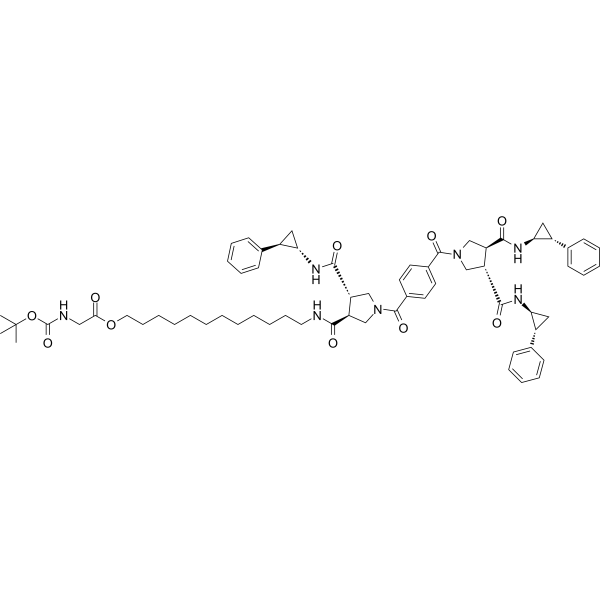 0 ImagesDiprovocim-X (compound 35) is a potent TLR1/TLR2 (toll-like receptor 1/2) agonist, with EC50 values of 0.14 and 0.75 nM for hTLR1/TLR2 and mTLR1/TLR2, respectively. Diprovocim-X is a potent adjuvant in vivo in mice, and serves to stimulate the adaptive immune response.
-
SMU-C68
 0 ImagesCat. No.: HY-175293CAS No.: 2677039-75-5
-
Pam3CSK4-Biotin
 0 ImagesCat. No.: HY-P1405CAS No.: 1429504-10-8Synonyms: Pam3Cys-Ser-(Lys)4-BiotinPam3CSK4-Biotin is biotinylated Pam3CSK4. Pam3CSK4-Biotin is a Toll-like receptor 1/2 (TLR1/2) agonist.



